Recommended SAG for Trail Bikes: The Best Starting Point

If you’re looking for the ideal SAG setting for your trail bike, you’ve probably seen recommendations ranging from 20% to 35%. So what’s the correct number?
The truth is that there isn’t a single perfect SAG value for every rider, bike, or trail. However, there are proven starting points that work well for most modern trail bikes and can help you achieve better traction, comfort, and control.
In this guide, you’ll learn the recommended SAG settings for trail bikes, why they work, and how to fine-tune them to suit your riding style.
What Is the Recommended SAG for a Trail Bike?
For most trail bikes, a good starting point is:
| Suspension | Recommended SAG |
|---|---|
| Fork | 22% |
| Rear Shock | 28% |
These values provide a balanced setup that works well across a wide range of terrain, from flowing singletrack to technical descents.
If you’re unsure where to start, use our MTB SAG Calculator to get your recommended SAG values in both percentage and millimeters based on your bike’s travel.
👉 Get a recommended starting point for your MTB suspension setup.MTB SAG Calculator
Why SAG Matters on a Trail Bike
Trail riding demands versatility.
Unlike an XC race bike or a downhill bike, a trail bike must climb efficiently while still offering confidence and control on descents.
Too little SAG can make the bike feel:
- Harsh over small bumps
- Nervous on rough terrain
- Lacking grip in corners
Too much SAG can make the bike feel:
- Slow and wallowy
- Unstable when pedaling
- Prone to bottoming out
The right SAG setting helps your suspension operate in its most effective range, improving traction, comfort, and predictability.
But even with the recommended SAG, your bike may still feel harsh, unstable or lack traction. Why Your MTB Feels Bad Even When SAG Is Correct explains what to check when the SAG number looks right but the suspension still doesn’t feel right.
Why We Recommend 22% Front and 28% Rear
These values are not random.
A slightly firmer fork helps maintain support during braking and cornering while keeping steering precise.
The rear suspension benefits from a little more SAG because it improves traction and allows the wheel to follow the terrain more effectively.
This combination creates a balanced feel that works exceptionally well for most modern trail bikes.
An Important Note About Rear SAG
The recommended 28% rear SAG is an excellent starting point for most trail bikes. However, there is one important detail that many riders overlook.
Most SAG recommendations are based on rear wheel travel, not simply the amount of shock stroke used.
Because every suspension design has a different leverage ratio, two bikes using the same percentage of shock stroke may produce very different amounts of rear wheel movement.
For this reason, the most accurate way to set rear SAG is to measure actual rear wheel travel rather than shock displacement alone.
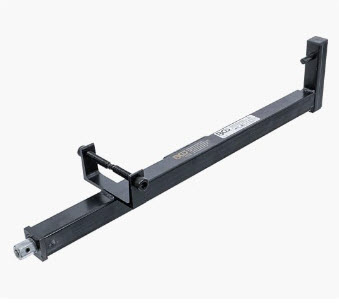
Tools such as the Slacker Virtual Fender make this process much easier by allowing riders to measure wheel movement directly at the axle, providing a more accurate representation of how the bike sits in its travel.

Does this mean measuring shock stroke is wrong?
Not at all.
For most riders, measuring shock stroke and using the recommended percentages will get very close to an ideal setup. However, if you’re looking for the highest level of accuracy and consistency, measuring actual rear wheel travel is the preferred method.
This becomes particularly valuable on modern trail and enduro bikes where suspension kinematics can vary significantly from one design to another.
Should Heavier Riders Use More SAG?
Not necessarily.

A heavier rider will typically use higher air pressure or a stiffer spring to achieve the same SAG percentage.
The goal isn’t to use more SAG because you weigh more.
The goal is to achieve the recommended SAG value regardless of rider weight.
This is one of the most common mistakes riders make when setting up their suspension.
When Should You Change These Numbers?
The recommended values above are only a starting point.
You may want to experiment depending on your priorities.
If You Want More Traction and Comfort
Try increasing SAG slightly.
For example:
- Fork: 23–24%
- Rear Shock: 29–30%
This can improve grip on loose or rocky terrain.
If You Want More Support and Efficiency
Try reducing SAG slightly.
For example:
- Fork: 20–21%
- Rear Shock: 26–27%
This can improve pedaling response and reduce suspension movement during hard efforts.
Common Trail Bike SAG Mistakes
Setting SAG Without Riding Gear
Always measure SAG while wearing the equipment you normally ride with, including:
- Helmet
- Shoes
- Hydration pack
- Tools and spares
Even a few kilograms can affect your setup.
Chasing Manufacturer Numbers Blindly
Manufacturer recommendations are useful starting points, but they are not always ideal for every rider.

Your weight, riding style, terrain, and preferences matter.
Ignoring Front-to-Rear Balance
A bike with perfectly set rear SAG but an incorrect fork setup can still feel terrible.
Always evaluate the bike as a complete system.
Use Our MTB SAG Calculator
Calculating SAG percentages is easy.
Converting those percentages into actual millimeter measurements is where many riders get confused.
Our free MTB SAG Calculator gives you a recommended starting point for:
- XC
- Downcountry
- Trail
- Enduro
- Downhill
And provides your target SAG in both percentage and millimeters.
Want to Go Beyond SAG?
Setting SAG correctly is only the first step.
Once your SAG is dialed in, the next stage is learning how to adjust rebound damping, compression damping, volume spacers, and overall suspension balance.
The MTB Suspension Setup Guide explains the complete process in a practical, step-by-step format so you can get the most from your bike.